Portugal · EST. 2025

Nature-based therapies for human flourishing.

Outdoor therapeutic interventions for people with neurodevelopmental conditions, and for anyone looking to nature for greater balance and well-being.

Our Partners
01 Team

A team
that thinks
together, for you.

  • 01PsychologistsPSI
  • 02NeuropsychologistsNPSI
  • 03Psychomotor TherapistsPMT
  • 04Occupational TherapistsTO
02 Why nature matters

People with neurodevelopmental conditions are often excluded from outdoor experiences, and that has consequences.

Diagnosis Autism Spectrum Disorder, Attention-Deficit/Hyperactivity Disorder and other neurodevelopmental conditions deeply affect the cognitive, social, emotional and physical lives of those who live with them, at every stage of life, and above all in their emotional and family relationships.

Barrier Limited accessibility, stigma, prejudice and a lack of inclusive policies and specialised support keep many of these people away from natural and social spaces. That is exactly where they miss out on essential opportunities: to breathe more calmly, to feel welcome, to be who they are, and to find, in nature and in their relationships with others, a place to belong.

Evidence Research is still limited, but it already shows some important results. Structured interventions in nature, with specialised support, improve social reciprocity, sustained attention and the development of adaptive behaviours, and strengthen a sense of belonging. Explore our evidence library.

03 Mission · Vision · Approach

A different kind of
therapeutic platform. Tailor-made.

Mission

Cultivating development.

To create opportunities for each person to develop their potential, strengthen their autonomy and find a greater sense of belonging, through outdoor practices grounded in scientific evidence and respectful of each individual's uniqueness.

Vision

A benchmark in outdoor care.

To be a benchmark in outdoor therapeutic care and in inclusive access to nature-based interventions, by consolidating innovative practices and building collaborative networks for research, training and knowledge sharing.

Approach

Fewer labels, more paths.

At Solum, every person is welcomed beyond their diagnosis: we look at their story and their unique way of being in the world. We bring together nature, movement and therapy in personalised plans, led by a transdisciplinary team, to create real change in everyday life.

04 Therapeutic practices

Seven modalities.
One unique plan for each person.

Each practice responds to a specific need, and the combination is tailored to the person.

  • 01 Aquatic

    Surf Therapy

    Executive functions and social-emotional skills, in the sway of the sea.

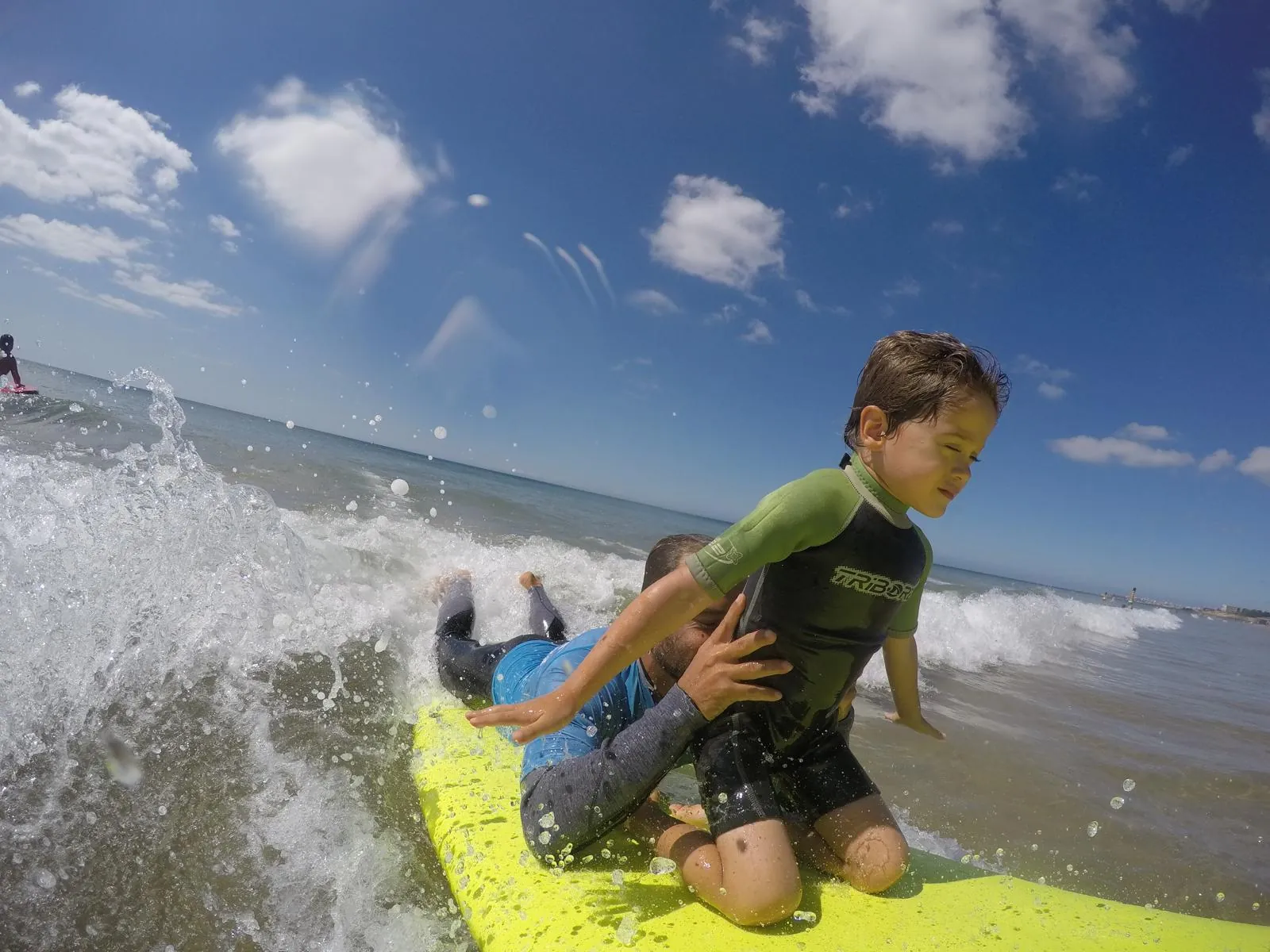
    The beach and the sea set their own rhythm: ever-changing variables that make us aware of our behaviour and emotional state, and ask us to adapt, anticipate, trust and find the resilience to ride out challenges.

  • 02 Vertical

    Therapeutic Climbing

    Confidence and emotional regulation, metres above the ground.

    Every move demands attention and care. Body and mind work together, in harmony, to overcome fear and uncertainty. Every wall translates into everyday victories.

    →
  • 03 Martial

    Therapeutic Jiujitsu

    Self-control, resilience and social-emotional skills, grounded in evidence from adapted martial arts.

    Jiujitsu isn't about strength; it's about sensing and reading. Reading the other person, reading your own body, feeling without reacting on impulse. The mat offers what many environments can't: predictable contact, clear rules and a rhythm you learn to inhabit. In that safe space, each person learns to be there and to be present, and acting without thinking becomes a conscious choice.

    →
  • 04 Rhythmic

    Therapeutic Capoeira

    Movement, music, rhythm and belonging, inside the roda.

    Capoeira is never played alone. The roda has its own code. The rhythm of the berimbau sets the time, the other person sets the space, and the body learns to converse before any word arrives. It's movement, it's music, it's dance happening in real time. And it is often the first place where belonging feels natural.

    →
  • 05 Clinical

    Therapeutic Companion

    A health professional who turns real-life settings into therapeutic opportunities.

    School, home, sport, public spaces: the plan follows the person wherever life happens, with method and clinical records. It's therapy firmly grounded in everyday life.

    →
  • 06 Psychology

    Clinical Psychology

    A safe space to name what you're going through.

    There are things the body does in the water, on the wall, in the roda and in daily life that need to be named. Clinical Psychology is that space, where experience gets a name, patterns become visible and change starts to make sense for the person living it.

    →
  • 07 Family

    Parent Guidance

    Therapy doesn't stop when the session ends.

    Therapy happens at home too: in the tantrums, the silences, the moments when no one quite knows what to do. Parent Guidance exists so that families and carers stop being spectators and become part of the process, with real tools, close support and the certainty that they are not alone on this path.

    →
In action · Real moments

Solum's therapies happen where life finds its meaning, in nature.

Therapist and participant climbing a rock face overlooking the ocean
01 Therapeutic Climbing
Upward view of a participant and therapist climbing a rock
02 Climbing · Vertical Route
Participant standing on a surfboard in the waves during a therapy session
03 Surf Therapy
05 Methodology

From the first conversation to the first results.

A clear process, led by a transdisciplinary team in constant dialogue with the family.

  1. 01
    Step one

    Initial Conversation

    We start by listening. In a 60 to 90-minute conversation, we gather relevant information, life history and clinical documents to understand each person's unique profile.

    • Conversation · 60 to 90 min
    • Gathering relevant information
    • Clinical documents
  2. 02
    Step two

    Individual Therapy Plan

    From there, we design a tailored plan with outdoor practices, clinical follow-up and, where it makes sense, the school and the family.

    • Combined modalities
    • Goal setting
    • School–family coordination
  3. 03
    Step three

    Intervention & Follow-up

    The team carries out, monitors and adjusts the plan over time to ensure real progress.

    • Weekly sessions with clinical records
    • Team meetings
    • Plan review every 6 months
06 Testimonials

What families
say about Solum.

After two years trying to work out what worked for Tomás, Solum was the first time anyone truly understood our son. Not just the diagnosis.
M
Tomás's motherAge 7 · Autism Spectrum Disorder (ASD)
What surprised me was the communication. Every week we know what happened, why, and what comes next. For the first time, I feel part of the process.
F
Beatriz's fatherAge 10 · ADHD
Francisco had never managed to be in a group without having a meltdown. After his third capoeira session, he came home singing. We didn't need anything more to understand.
M
Francisco's motherAge 12 · Sensory Integration Difficulties
After two years trying to work out what worked for Tomás, Solum was the first time anyone truly understood our son. Not just the diagnosis.
M
Tomás's motherAge 7 · Autism Spectrum Disorder (ASD)
What surprised me was the communication. Every week we know what happened, why, and what comes next. For the first time, I feel part of the process.
F
Beatriz's fatherAge 10 · ADHD
Francisco had never managed to be in a group without having a meltdown. After his third capoeira session, he came home singing. We didn't need anything more to understand.
M
Francisco's motherAge 12 · Sensory Integration Difficulties
Francisco had never managed to be in a group without having a meltdown. After his third capoeira session, he came home singing. We didn't need anything more to understand.
M
Francisco's motherAge 12 · Sensory Integration Difficulties
After two years trying to work out what worked for Tomás, Solum was the first time anyone truly understood our son. Not just the diagnosis.
M
Tomás's motherAge 7 · Autism Spectrum Disorder (ASD)
What surprised me was the communication. Every week we know what happened, why, and what comes next. For the first time, I feel part of the process.
F
Beatriz's fatherAge 10 · ADHD
Francisco had never managed to be in a group without having a meltdown. After his third capoeira session, he came home singing. We didn't need anything more to understand.
M
Francisco's motherAge 12 · Sensory Integration Difficulties
After two years trying to work out what worked for Tomás, Solum was the first time anyone truly understood our son. Not just the diagnosis.
M
Tomás's motherAge 7 · Autism Spectrum Disorder (ASD)
What surprised me was the communication. Every week we know what happened, why, and what comes next. For the first time, I feel part of the process.
F
Beatriz's fatherAge 10 · ADHD
07 Scientific Research

The science behind
every intervention.

Solum's activities are built on leading research. Here we gather the most relevant articles for families, students and researchers.

Surf Therapy 2024

Surf therapy for people with mental health disorders: a systematic review of randomized and non-randomized controlled trials

Carneiro L., Clemente F.M. et al.

BMC Complementary Medicine and Therapies

A systematic review assessing the effectiveness of surf therapy for mental health disorders. The results show improvements in anxiety, depression and overall well-being, with a positive impact on emotional regulation and sensory integration.

DOI: 10.1186/s12906-024-04674-0 Read article
Climbing 2023

The therapeutic effects of climbing: A systematic review and meta-analysis

Gassner L. et al., University of Vienna

PM&R — The Journal of Injury, Function and Rehabilitation

A meta-analysis of 18 studies (n=568) showing that therapeutic climbing is a safe and effective intervention for ADHD, psychosomatic disorders and special developmental needs, with gains in attention, behaviour and social well-being.

DOI: 10.1002/pmrj.12891 Read article
Capoeira 2025

The Role of Capoeira in Improving Motor and Social Skills in Children with Autism

Lev-Ari R., Lotan M., Korn L. — Ariel University, Israel

Children — MDPI

A qualitative study with parents of children with ASD (aged 7–15) taking part in Capoeira programmes. It reveals improvements in coordination, body awareness, sensory regulation, social communication and group belonging in an inclusive setting.

DOI: 10.3390/children12101305 Read article
Therapeutic Companion 2023

Nature-Based Interventions for Autistic Children: A Systematic Review and Meta-Analysis

Fan M.S.N., Li C.H.W., Ho L.L.K.

JAMA Network Open — American Medical Association

A meta-analysis of 24 studies (717 participants) showing that nature-based group therapeutic interventions with experiential learning produce short-term improvements in sensory, social and behavioural functioning in children with ASD.

DOI: 10.1001/jamanetworkopen.2023.46715 Read article
Clinical Psychology 2024

Could Nature Contribute to the Management of ADHD in Children? A Systematic Review

Vanaken G.J., Danckaerts M.

International Journal of Environmental Research and Public Health — MDPI

A systematic review of how interventions in natural environments contribute to managing ADHD in children, identifying mechanisms by which exposure to nature reduces attention deficits and impulsivity, with direct implications for integrated clinical practice.

DOI: 10.3390/ijerph21060736 Read article
Surf Therapy 2023

Surf therapy for children and adolescents with autism spectrum disorder: a systematic review

Håkansson K. et al.

PubMed — National Library of Medicine

A systematic review focused on children and adolescents with ASD taking part in surf therapy programmes. The results point to improvements in social reciprocity, emotional regulation and adaptive behaviours, reinforcing the potential of this modality as a structured complementary intervention.

PMID: 38060224 Read article
Nature & ADHD 2017

Nature exposure reduces ADHD symptoms in children

University of Illinois at Urbana-Champaign

Science Daily — Environment and Health Research

Research from the University of Illinois shows that regular exposure to natural environments significantly reduces ADHD symptoms in children, improving attention and impulse control. The findings support integrating natural settings into therapeutic interventions.

Science Daily, February 2017 Read article
Climbing 2015

Therapeutic climbing in children with cerebral palsy: a single-subject study

Bettmann J.E. et al.

PubMed Central — National Library of Medicine

A study showing the effects of therapeutic climbing in children with developmental disorders, with documented improvements in muscle strength, balance, coordination and self-regulation, supporting its use in specialised intervention settings.

PMC: 4548691 Read article
Climbing 2017

Rock climbing for promoting physical activity in youth

Lutter C. et al.

Heliyon — ScienceDirect / Elsevier

Research on the impact of climbing on the physical and psychosocial development of children and young people. The results show significant improvements in physical fitness, self-concept and intrinsic motivation, supporting the inclusion of climbing in therapeutic programmes for populations with special needs.

DOI: 10.1016/j.heliyon.2017.e00427 Read article
Jiujitsu 2025

Brazilian Jiu-Jitsu as a therapeutic intervention: effects on mental health and social behaviour

Reference Global — Baltic Journal of Health and Physical Activity

Baltic Journal of Health and Physical Activity

A 2025 study on the effects of BJJ as a therapeutic intervention, documenting a positive impact on mental health, social behaviour and emotional regulation. It reinforces the relevance of adapted martial arts in intervention programmes for children and young people with special needs.

DOI: 10.2478/bgbl-2025-0003 Read article
Jiujitsu 2023

Influence of Brazilian Jiu-Jitsu on psychosocial development in children and adolescents

Theory and Methods of Physical Education — TMFV

Theory and Methods of Physical Education

An article analysing the influence of Brazilian Jiu-Jitsu on the psychosocial development of children and adolescents, focusing on improved self-esteem, discipline, frustration management and relational skills, all central factors when working with neurodivergent populations.

TMFV Journal, 2023 Read article
Jiujitsu 2024

Effects of Brazilian Jiu-Jitsu on attention, behaviour and social competences in children with ADHD

Research, Society and Development Journal

Research, Society and Development — RSD Journal

Research focused on the effects of BJJ in children with ADHD, showing improvements in attention, behavioural control and social skills. The results reinforce the potential of adapted martial arts as a complement to traditional therapeutic approaches.

RSD Journal, vol. 51044 Read article
Jiujitsu 2023

Brazilian Jiu-Jitsu in enhancing mental and physical health among veterans and first responders: a scoping review

The Sport Journal — Scoping Review

The Sport Journal

A scoping review of the benefits of BJJ for mental and physical health, with evidence of reduced PTSD, anxiety and depression symptoms, and improved resilience and social cohesion. Relevant to understanding the therapeutic mechanisms of martial arts in vulnerable populations.

The Sport Journal, 2023 Read article
08 Pricing

Investing in a path.
With clarity.

Prices apply from September. Each plan is designed with your case manager, and if any difficulty comes up, we talk about it before it grows.

Monthly plans

1 session per week
Surf Therapy €280.00/ month
Therapeutic Capoeira €220.00/ month
Therapeutic Jiujitsu €220.00/ month

Per session

booked with your case manager
Therapeutic Climbing €80.00/ session
Clinical Psychology €75.00/ session
Parent Guidance €75.00/ session
Therapeutic Companion €50.00/ hour

Notes. Monthly plans reserve each participant's time slot and therapist exclusively. Other frequencies (fortnightly, for example) and plans combining several activities are arranged case by case with the case manager. All prices include personal accident and civil liability insurance. Booking, cancellation and payment terms are set out in the enrolment form.

Design my plan ↗
09 Frequently asked questions

Answers before
the first step.

The most common questions from people coming to Solum for the first time.

Another question? Talk to us ↗

Solum welcomes people from the age of 3, at any stage of life. The most common reasons include ASD, ADHD and sensory integration difficulties, among other neurodevelopmental conditions and psychological distress. Every case is assessed individually.

No. We also welcome people with no diagnosis at all who are looking to nature as a path to greater self-knowledge and balance. The starting point is never a label; it's the wish to live more fully.

Sessions take place outdoors and at strategic partners' venues, mostly in Cascais and central Lisbon. The location depends on each person's therapy plan, so if you're in another region, talk to us and we'll find a solution.

Every journey is unique; it depends on the person, the family, the context and the goals we build together. What we do have is structure: reviews at 6 months, ongoing adjustments to the plan and a team that's there at every stage. The right amount of time is whatever the person needs.

No. It complements and works alongside the care the person already receives, in dialogue with doctors, psychologists and other professionals.

The first contact is an in-depth, 60 to 90-minute conversation with the family or the person, covering relevant information, life history and clinical documents. At the end, we present a personalised plan.

Prices depend on the plan agreed. After the first contact, we present a personalised proposal. Get in touch for a no-obligation conversation.

10 Next step

Let's
talk.

Fill in the form and our team will get back to you.

Location
Portugal · Nationwide service
Hours
Mon to Fri · 9 am to 7 pm
01 / 01 Talk to us
Please enter your name
Invalid email
Invalid phone number
Please write a short message

Reply within 48h · Your data will not be shared.

Request received. We'll be in touch within 48h.